
How false consensus can derail strategy, silence truth, and stall progress

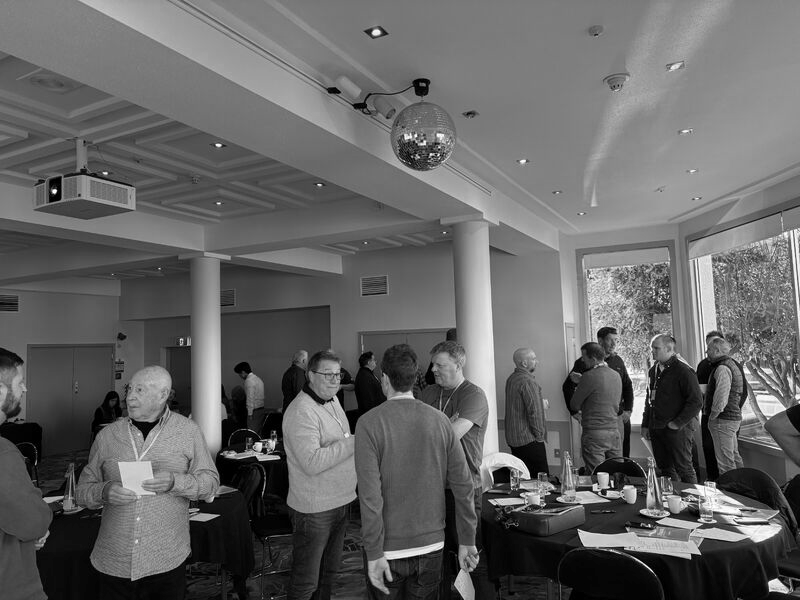
Not long ago, I found myself in an all-day planning meeting. The room was full of functional leaders and colleagues, all rallying around a bold new operational plan for the year ahead. We had heard an inspirational call to action from our senior leader, followed by hours of collaborative debate. By day’s end, we had alignment and enthusiasm around a plan that was set to transform our function.
There was only one problem: I didn’t believe in it.
Privately, I had serious doubts about its feasibility. The budget was tight, timelines were unrealistic, and I questioned whether the strategy would deliver meaningful outcomes for the business. Still, I stayed quiet. It felt as though everyone else was convinced, and past experience had taught me that voicing dissent could be interpreted as obstruction. So I nodded along.
A whisper in the lift
Months later, in the lift with a trusted colleague, I asked what she really thought of the plan. She looked at me and simply whispered:
“No chance.”
We both laughed - nervously. And I wondered: why didn’t either of us speak up?
Understanding collective illusions
This is a classic example of what behavioural researchers call a collective illusion: a situation where most people in a group privately disagree with a perceived majority opinion but go along with it anyway, because they wrongly assume others agree.
In his book Collective Illusions, Todd Rose (2022) explains how social conformity and fear of exclusion can drive this dynamic. In organisational life, these illusions often appear harmless or even invisible at first. But over time, they can undermine trust, stifle creativity, and derail decisions that require honesty and diverse thinking.
Collective illusions don’t just affect teams - they shape cultures. They can span entire departments, persist over time, and influence everything from strategy to performance reviews. They erode psychological safety by making dissent feel dangerous, even when it’s essential.
Why we don't speak up
We stay silent for many reasons:
- We fear looking negative, difficult or disloyal
- We assume someone else will raise the issue
- We don’t want to derail momentum
- We interpret silence as agreement
But silence isn’t always a sign of alignment - it’s often a signal of discomfort, disengagement or dissent that hasn’t found a safe place to land.
What can we do about it?
Over the past few months, we’ve worked with clients to explore how collective illusions affect not just decision-making, but also individual confidence, leadership integrity and team performance. It’s a challenging conversation - but also an empowering one.
To reduce the risk of falling into a false consensus trap, teams and leaders can:
- Explicitly invite dissent – ask what’s not being said, and make it safe to say it
- Normalise productive disagreement – treat difference as a strength, not a threat
- De-couple challenge from conflict – allow people to critique ideas without being labelled ‘difficult’
- Reward transparency over harmony – especially during strategy and planning
- Check assumptions – what do we know vs. what are we assuming others think?
The painful truth
And the operational plan? It met a slow, painful death just six months later - unfunded, unsupported and largely forgotten.
The lesson wasn’t just about flawed execution. It was about the risk of silence.
If no one speaks up, everyone assumes they are alone. And that is how illusions thrive.