

Being a servant leader does not mean being a 'pushover'
Servant leadership is often praised for its empathy, humility and others-focused approach. But at the Australian Catholic University (ACU) leadership team’s annual offsite, while exploring the TRACOM Group’s Social Style and Versatility framework, we examined a sharper edge to this idea and asked some essential questions:
- When does serving others become stepping back too far?
- When does accepting difference become condoning underperformance?
- Are we avoiding discomfort, or using it to drive growth?
There is a fine line between flexibility and fragility, between support and surrender. True servant leadership demands more than being agreeable. It requires courage, clarity and backbone.
What strong servant leadership looks like ...
A powerful moment in the session came from Patrick Woods, Chief Operating Officer at ACU, who offered a clear and compelling blueprint for leadership. Clear, because it is straightforward. Compelling, because it is rarely done well or consistently:
As a leader, do these five things well:
- Set clear expectations
- Agree on goals
- Provide regular feedback
- Offer recognition
- Give support
And do all of this while managing interpersonal tension. Not avoiding it, but using it to build productive, resilient relationships.
Challenge as an act of service
We often love leaders who make us feel good. But the best leaders are those who help us become better, even when it is uncomfortable. Sometimes, that means holding us accountable, challenging our assumptions, or offering feedback that stings in the moment but strengthens us in the long term.
Some of the most valuable feedback I have ever received was hard to hear. But I would not be where I am today without it. True servant leaders are willing to say what needs to be said, even if it means risking temporary discomfort.
That is not weakness. That is leadership in service of growth.
Grounded. Active. Bold.
Servant leadership, done well, is not passive. It is bold. It holds boundaries. It empowers performance without abdicating responsibility. It combines behavioural awareness with clarity of intent. And when supported by frameworks like Social Style and Versatility, it becomes even more actionable, measurable and scalable.
Thank you to the exceptional ACU team for the opportunity to explore these ideas together.
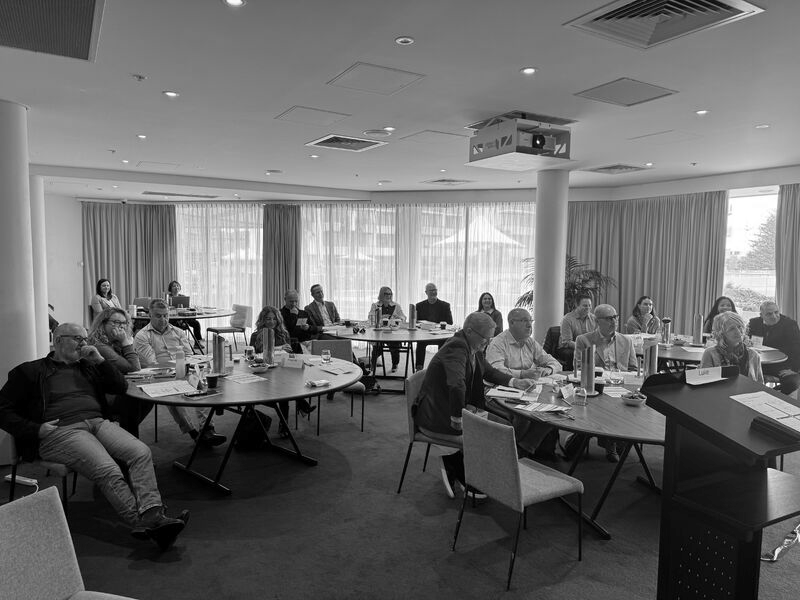
One moment that stood out was watching a scene from Meet the Parents, which hilariously illustrates the tension that can arise between different Social Styles in the workplace.